THE ARCTIC EXPEDITION
5 years around the Arctic pole to better understand human impact on the oceans
The Expedition in Brief
Launched in 2020, the Arctic 2020–2024 expedition is a 5-year journey through the Arctic Ocean.
With its pioneering program “Arctic Change”, its main scientific objective is to continuously monitor greenhouse gas concentrations in this region particularly sensitive to climate change. Through its multidisciplinary and inclusive approach, the expedition aims to welcome scientific and cultural projects with the inhabitants of the countries visited.
In 2023, Pacifique completes the Northwest Passage for the first time, integrating a range of scientific programs and the project “Beyond Her Horizons”
In 2024, Pacifique concludes its polar expedition by preparing for the second crossing of the Northwest Passage in the opposite direction: from Alaska to Greenland.
This expedition is part of the Decade of Ocean Science for Sustainable Development (2021-2030) proclaimed by the United Nations in 2017.
Vessel Tracking
Follow the live position of the sailboat Que Sera during the Arctic expedition.
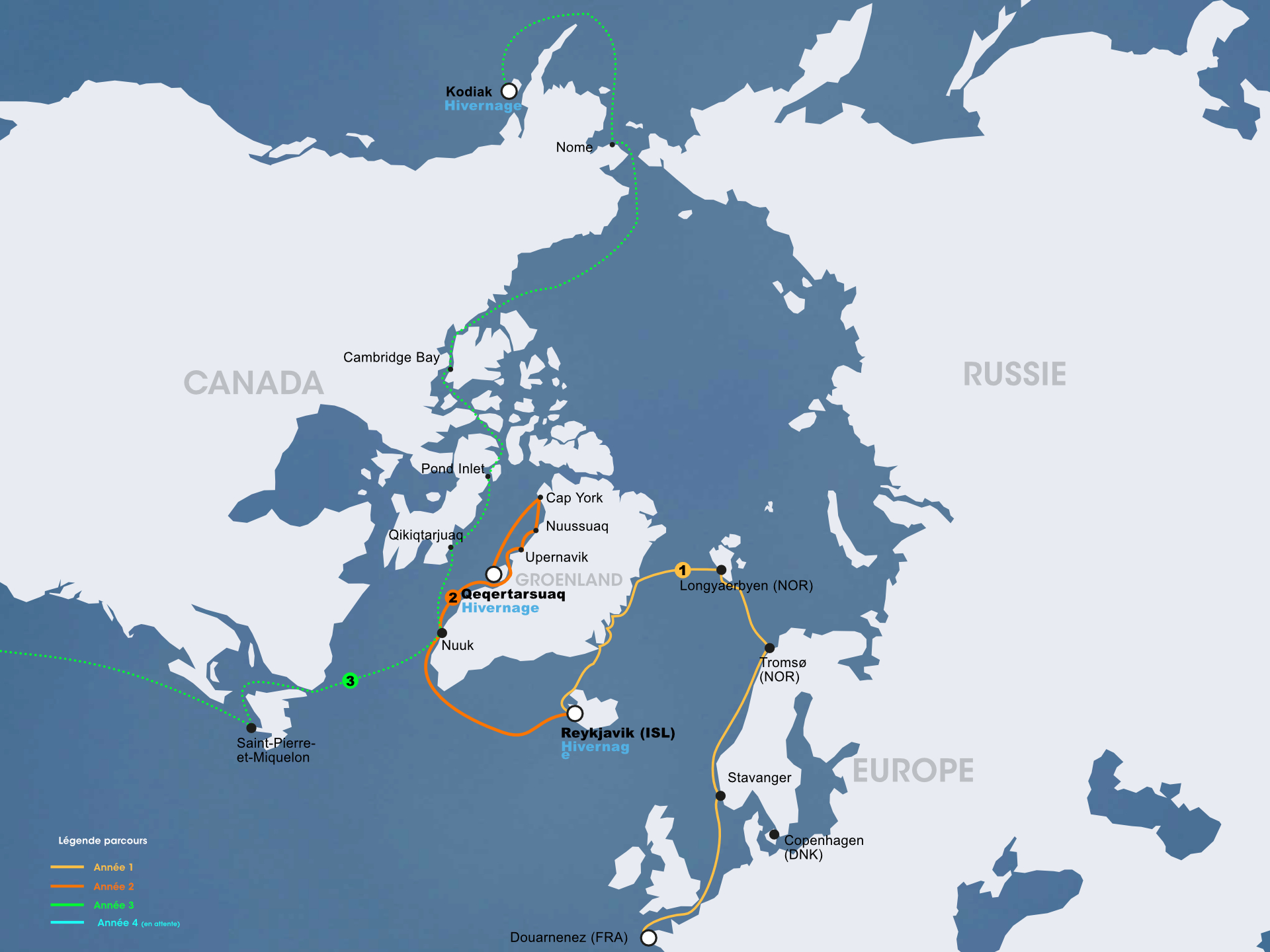
In 2020, the sailboat Mauritius completes a first warm-up tour along the coasts of Europe, to Svalbard, on the east coast of Greenland, and in Iceland.
In 2021, the expedition resumes, heading towards Greenland. A navigation in Baffin Bay up to latitude 75°N. The sailboat overwinters from November to June 2022 in the community of Qeqertarsuaq located on Disko Island.
In 2022, the expedition is suspended (details in the official press release), the sailboat Mauritius descends to more southerly latitudes, and the scientific, socio-educational, and artistic programs continue.
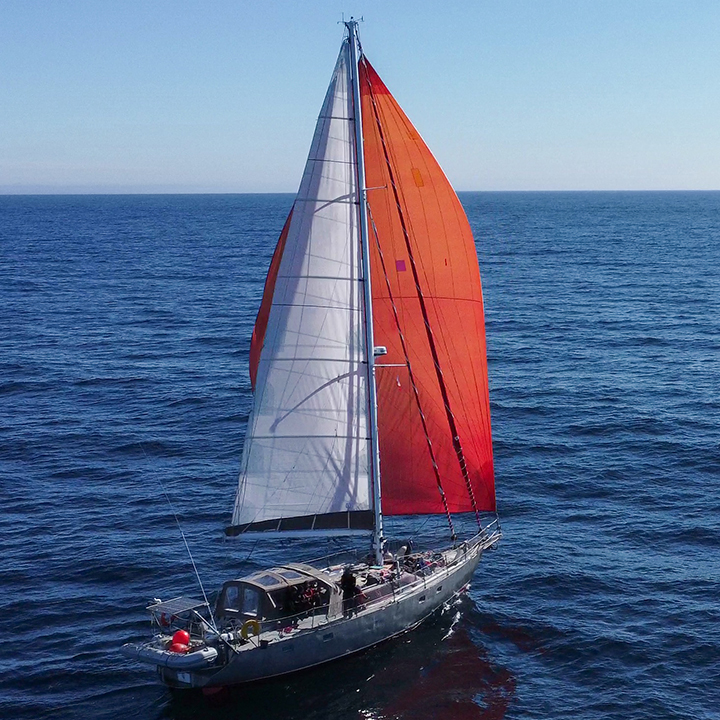
In 2023, the expedition resumes aboard the sailboat Que Sera, a more suitable platform for undertaking the Northwest Passage. The boat plans to reach the Kodiak Islands in Alaska.
The Vessel
Pacifique has 20 years of experience in conducting oceanographic expeditions worldwide with sailboats. As true logistical platforms, they enable traversing the oceans to carry out scientific missions or cultural programs.
Its sailboats are regularly chartered by researchers and scientific organizations to better understand human impact on the oceans and raise public awareness of sustainable development issues.
It is pleased to partner with these institutions by offering the necessary logistical support for the successful execution of these scientific programs.