
SCIENCES MANGROVES
Study one of the most misunderstood ecosystems on our planet
Study one of the most misunderstood ecosystems on our planet
WHY MANGROVES?
Mangrove forests are among the most valuable coastal ecosystems on our planet: they protect coastlines, improve fishing conditions, filter water, and store large amounts of carbon.
However, over the past 50 years, global mangrove coverage has declined by 20 to 35%. According to the IUCN Red List of Ecosystems (2024), half of them are now threatened with extinction. Global warming could cause 1.8 billion tons of currently stored carbon to be released by 2050, resulting in estimated socio-economic losses of $336 billion.
Faced with these challenges, it is crucial to better understand how they work and to promote initiatives that aim to preserve these fragile and essential environments.
IN COLLABORATION WITH THE UNIVERSITY OF GENEVA
The study of mangroves opens a new chapter in the collaboration initiated in 2017 with the F.-A. Forel Institute, Department of Environmental and Water Sciences at the University of Geneva.
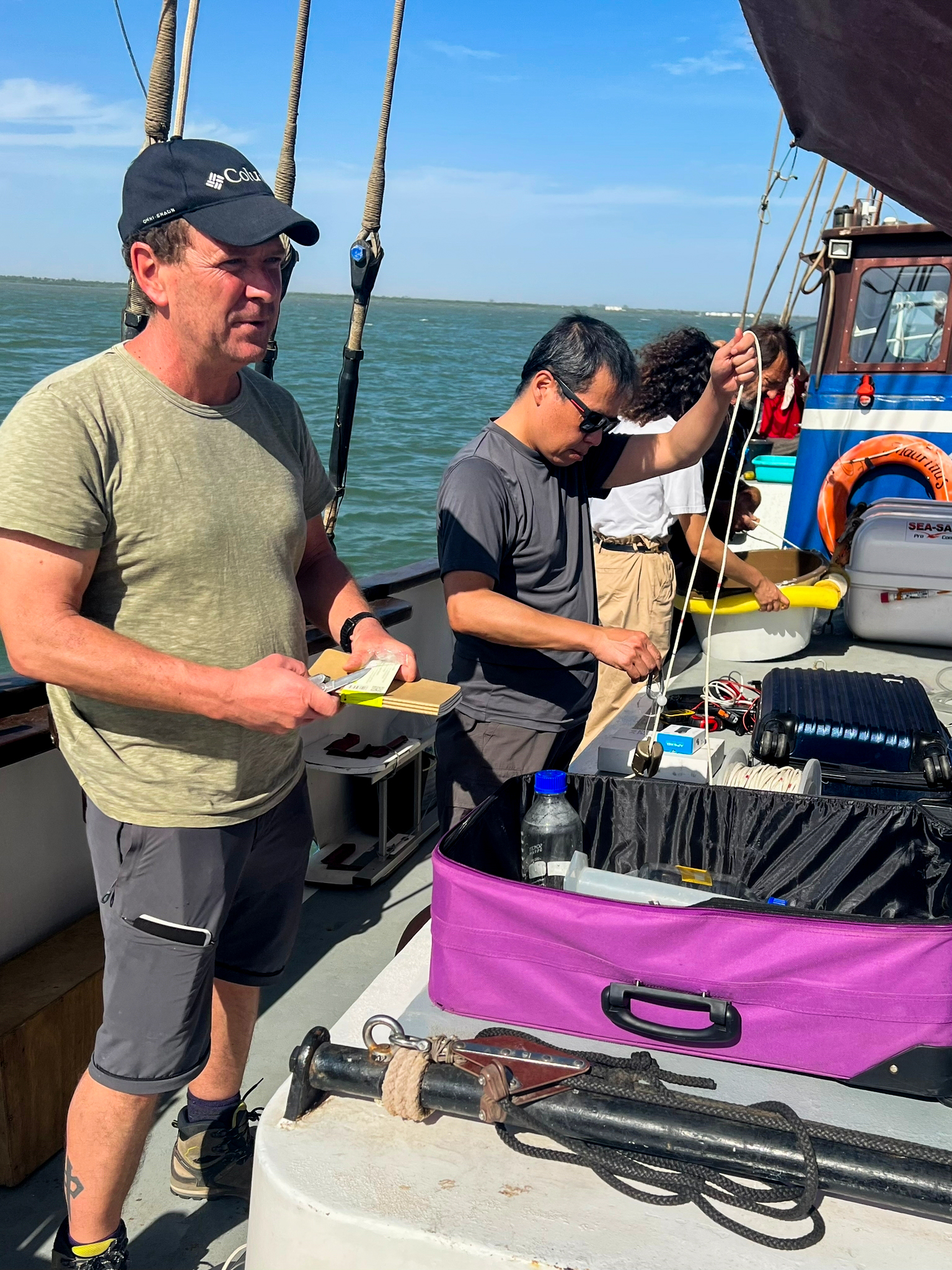
On the initiative of this expedition, Pacifique has been participating in the Sailing for the Mangroves program in The Gambia since 2023. This pilot project has enabled further research into The Gambia’s mangrove ecosystem, which is still largely unknown, by collecting scientific data essential for assessing its health. It focuses on four main areas:

SCIENTIFIC PROJECT MANAGERS
Pacifique has been working in cooperation for several years with the team of environmental scientists from the Department of Aquatic Physics at the University of Geneva, notably Prof. Daniel McGinnis, Director of the F.-A. Forel Center for Environmental and Water Sciences.
Since 2021 Dr. César Fernando Ordoñez Valdebenito joined the research team along with Mme. Anja Hadjukovic in 2025, as a research assistant.
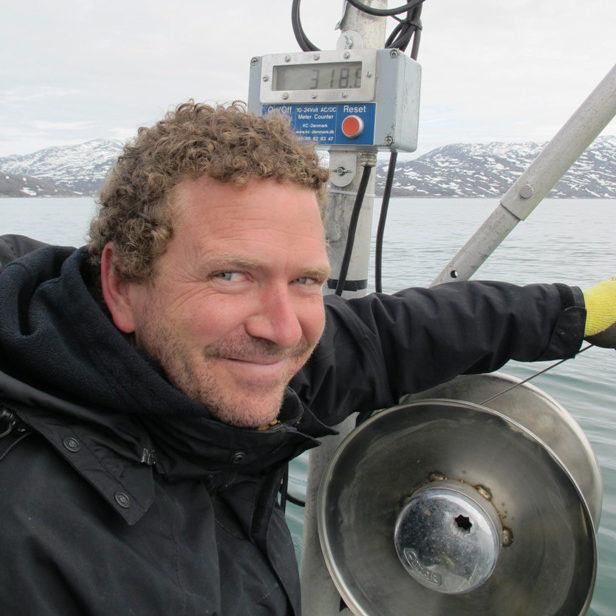
“There have been virtually no studies or protection programs concerning this environment, even though it plays a crucial role in ecology as well as in the local economy and culture. That is why the goal of our first expedition—and those that will follow—is to build a scientific database on this mangrove, which will enable us to carry out the analyses and studies that are essential to its protection.”
Prof. Daniel McGinnis,
Director of the F.-A. Forel Department of Environmental and Water Sciences, Associate Professor of Aquatic Physics
PLANKTON MONITORING
In addition to studying mangroves, the expedition is taking the PlanktoScope on board for a new monitoring program that will be carried out throughout the voyage.
This microscope allows researchers to photograph, identify, and quantify the different species of plankton present in the water. Scientific data remains very incomplete, particularly in the southern hemisphere. According to a protocol established with researcher Dr. Mathilde Dugenne, who supervises the program at the University of Geneva, Pacifique is contributing to this global effort to better understand our oceans.
Beyond its scientific function, the PlanktoScope is at the intersection of the programs conducted on board. Easy to use, it allows young people in the socio-educational program and artists on board to connect with the scientific missions.
The device will also be used in mangrove research, helping to refine knowledge about this still poorly documented ecosystem.

